San Miguel County’s Mining Regulations Threatens Colorado’s Uranium Mining Revival and Invites Costly Litigation
By Marjorie Haun
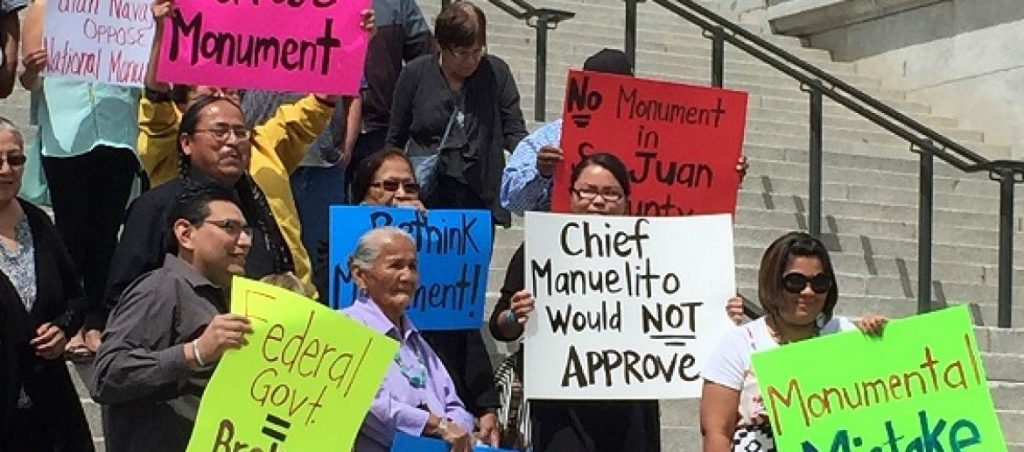
On Wednesday, January 21, the San Miguel County, Colorado Commissioners unanimously approved onerous and legally dubious mining regulations that will effectively curtail all new uranium exploration and mining in the County. The vote has been put off for nearly two years following protracted hearings and opposition from the mining companies with hundreds of millions of dollars’ worth of uranium ore reserves hanging in the balance. After multiple postponements, the commissioners passed the regulations despite outcry from residents of the County and industry experts. Their vote underscores the deep divisions between Telluride’s wealthy liberals and the prospectors, miners, and ordinary folk in the County’s sparsely populated western region.
As the San Miguel County seat, Telluride is also its population center and is an enclave for uber-wealthy celebrities like Oprah Winfrey, Tom Cruise, Jerry Seinfeld, and Ralph Lauren. Perhaps due to its outsized influence, the County Commissioners tend to represent ultra-upscale Telluride and Mountain Village more than it does the rural communities.
The new mining regulations, outlined in a comprehensive draft on the county’s website, place unreasonable barriers to new exploration and mining on private and federal lands. More importantly, they are unnecessary, since all potential environmental concerns are already addressed in state and federal law. San Miguel’s draft imposes overlapping requirements, clashing with this framework and the federal laws governing Bureau of Land Management (BLM) and Department of Energy (DOE) lands. The County’s overreach invites Supremacy Clause violations by potentially infringing on a claim owner’s mineral rights on public domains.
The regulations will require permits for any disturbance beyond casual prospecting, demanding exhaustive submissions dealing with transportation, noise limits, blasting restrictions, dust mitigation, wildlife habitat, vegetation, water drainage and erosion plans, and proof of financial and technical expertise. Exploration and mining activities will face public hearings before the Planning Commission and County Commission. Adjustable financial bonds to cover reclamation, with permits expiring after three years of inactivity—extensions requiring further hoop jumping. Violations risk revocation and bond forfeiture, potentially transforming even the smallest operations into an administrative quagmire.
It appears that a Boulder law firm approved the final iteration of the regulations. Although they’re removed some of the direct conflicts with state and federal laws, they are using the vaguely defined “Impact Area” to leverage future court actions and delays to forestall new mining and make it prohibitively expensive. This legal chicanery extends county oversight to virtually any location where impacts are deemed “adverse” by whomever defines them as such. This forces a two-step review process that empowers opponents to repeatedly demand excessive details, while forcing applicants to foot the bill for county-selected consultants and provide exhaustive reports on everything from vehicle emissions and wildlife habitats to plant life monitoring and light pollution mitigation in remote, sparsely populated regions. Ultimately, these overreaching rules invite unqualified County inspections and lawsuits against permittees, crushing the industry and squandering the potential economic windfall that uranium mining could provide.
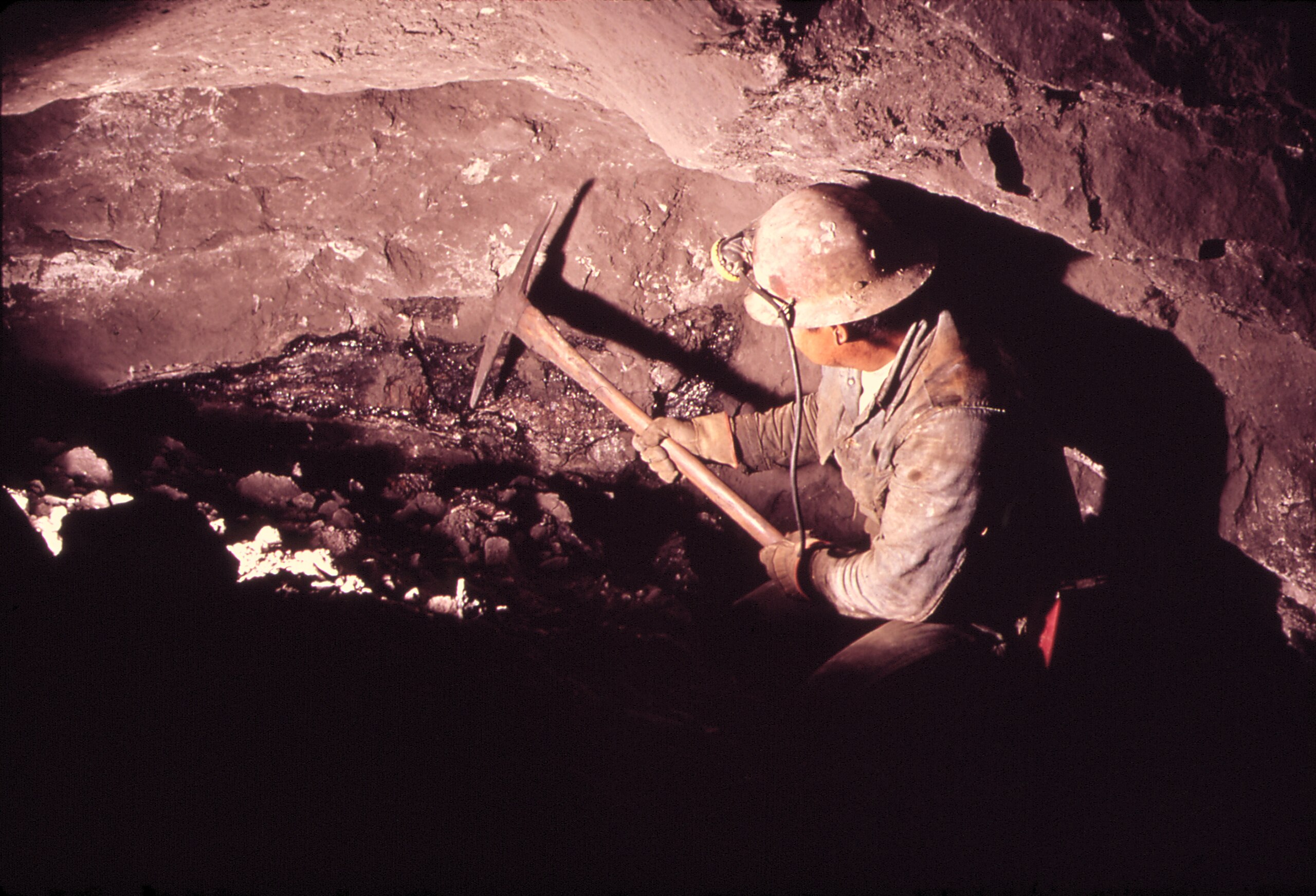
This framework doesn’t regulate; it effectively bans, catering to Telluride’s second and third-home owners and eco-tourists who view resource extraction as an affront to their idyllic retreats, while ignoring the concerns of rural blue-collar communities in San Miguel’s Norwood, Egnar, and Redvale, and neighboring Montrose County’s Nucla and Naturita, and Dolores County’s Dove Creek, towns populated by ranchers, miners, skilled tradesmen and small business owners. These areas, far from luxury enclaves, built their economies on the Uravan Mineral Belt during the 1950s and 1970s, when this area yielded 11% of America’s uranium and 80% of its vanadium during the Cold War.
Veteran Colorado and Utah uranium exploration and mining men have decried the impact of these burdensome regulations, warning that they will destroy any possibility of reviving uranium and vanadium mining in the southern end of the Uravan Mineral Belt. This echoes broader testimony from stakeholders who see the rules as a blow to rural prosperity where renewed mining has the potential to inject $1.3 billion into Colorado’s economy by 2040.
Adam Eckman, President of the Colorado Mining Association (CMA), has been unequivocal in his criticism. In testimony, he stated that the draft regulation grants the county unlawful “veto authority” over Division of Reclamation, Mining and Safety (DRMS) approvals, creating “purposely duplicative” hurdles that conflict with federal mandates under the BLM and DOE. Eckman further warned that these measures “function as a veto to state issued permits,” undermining DRMS’s jurisdiction without enhancing environmental protections. He highlighted the national stakes: “The Department of Energy has been charged with developing a secure domestic source of uranium to supply the nuclear fuel that will power the expansion of the electrical systems America must have to meet the demands of the AI Revolution.” If these regulations are passed, San Miguel risks federal preemption, as courts have invalidated similar local bans on oil and gas.
Sean Pond, a Montrose County Commissioner who is running for incumbent John Hickenlooper’s (D) Senate seat says, “San Miguel County’s mining regulations are a clear example of how ideology has replaced science and practical land stewardship in Colorado. These rules are not about safety or environmental responsibility. They are designed to make lawful mineral development economically and procedurally impossible. By stacking permitting hurdles, vague standards, and endless review cycles, the county has effectively imposed a de facto ban on mining while pretending otherwise.”
Under the guise of environmental consciousness, the regulations pander to groups like the Sheep Mountain Alliance, whose influence drowns out rural input. As Eckman urges, a collaborative multi-agency memorandum of understanding could integrate protections with economic growth, avoiding the “dangerous and potentially costly game” the county is playing. Instead, the rules silence communities like Egnar and Redvale, where residents crave “good, honest local jobs” without the trappings of Mountain Village’s beau monde mansions.
With the passage of the regulations repercussions will be swift. The CMA, alongside claim owners and industry allies, is poised to file federal lawsuits immediately, alleging takings under the Fifth Amendment and preemption. Damages could reach into the billions, and Eckman warned in previous public testimony that legal defense fees could bankrupt the county, diverting funds from essential services like roads and schools. “The San Miguel County Commissioners must vote no, or brace for the suits that will potentially bleed us dry.” Rural residents deserve to have their taxpayer dollars protected from unwinnable court battles.
The uranium and vanadium ore deposits are where they are because of geology. These ore deposits cannot be moved to some other location. They cannot be replaced. Long before the ultra-rich discovered its remote beauty, Telluride was one of Colorado’s oldest and most productive mining towns, but a new mining boom would have very little effect on Telluride as it is today. Nevertheless, good mining jobs would bring a flowering of prosperity to all the struggling towns also situated in San Miguel County.
The mining regulations aren’t protection—they’re privilege masquerading as virtue. The Commissioners can either heed the warnings or face a harsh reckoning that could cost the County amounts of money that would leave even Telluride’s nouveau riche bewildered.